

About Cymbidium
Cymbidium.info is the go-to for florists and arrangers looking to get the very best from cut Cymbidium. Discover the elegance, versatility and creative potential of this distinctive orchid, with inspiration, practical ideas and fresh ways to use Cymbidium in floral design and events.
Cymbidium.info is an initiative by Dutch Cymbidium growers, working together to share inspiration and showcase the many possibilities of Cymbidium.
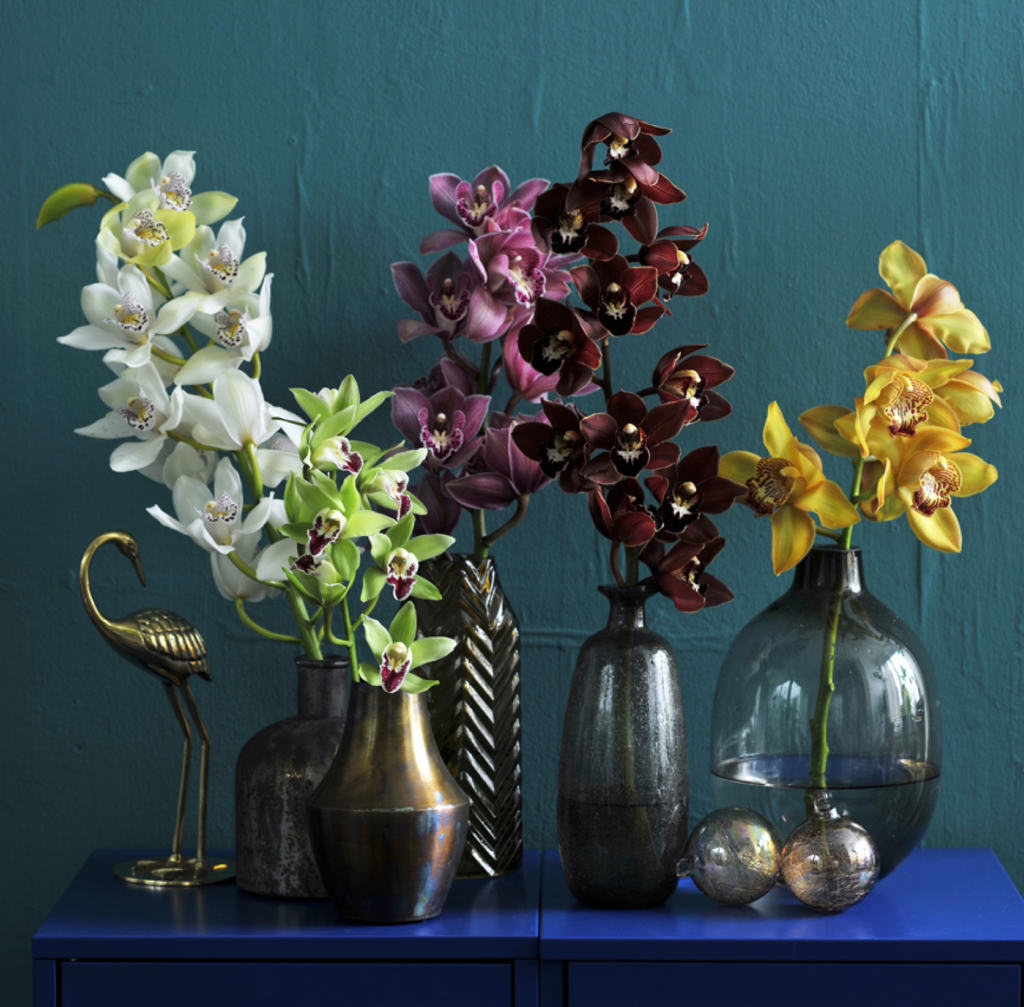
Cymbidium is an elegant and mysterious flower.
The Cymbidium is versatile due to its beautiful flowers, extensive colour palette and variety of shapes. Cymbidium belongs to the cut orchid flower family. In addition to Cymbidium, this family also includes other cut orchids: Phalaenopsis, Vanda, Cattleya, Paphiopedilum, Dendrobium and Oncidium.
There are more than 1,000 species of Cymbidiums in total. You can quickly recognise them by their impressive flower column. The varieties are mainly divided into two categories: small-flowered and large-flowered Cymbidiums.
All colours of the rainbow
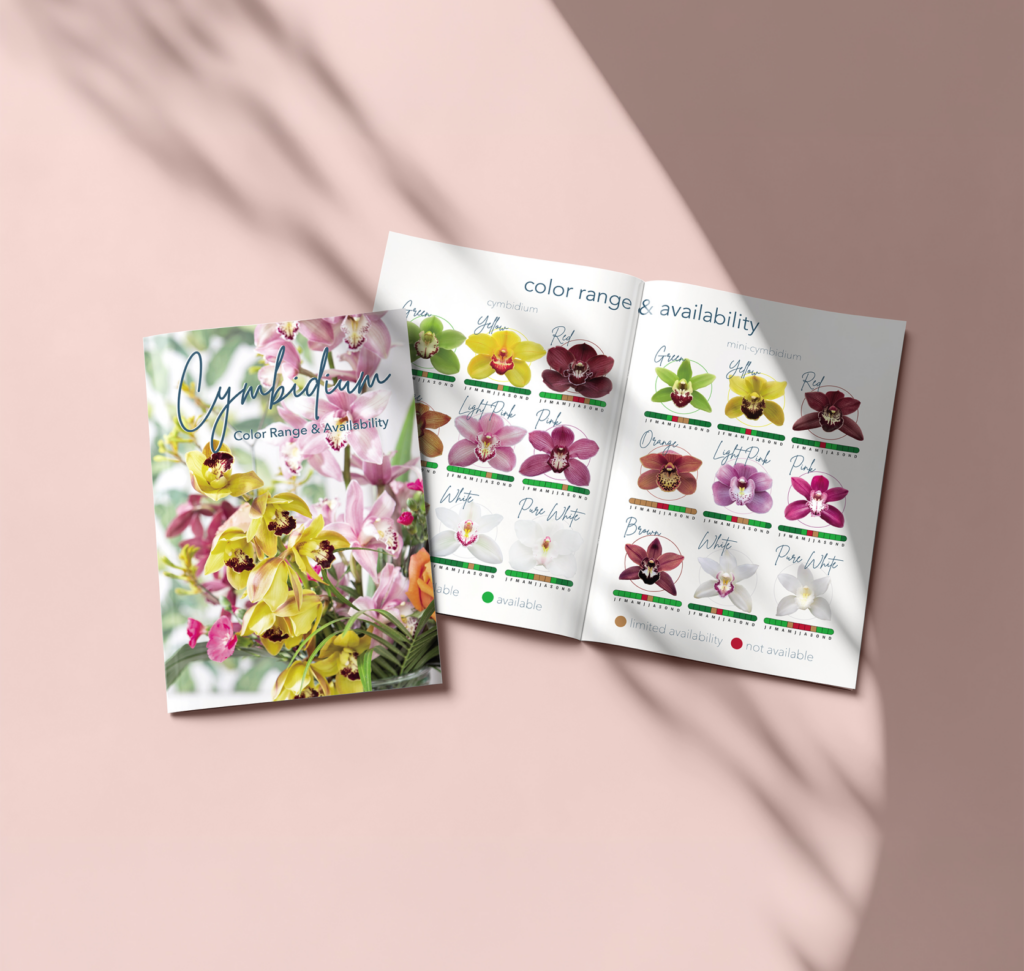
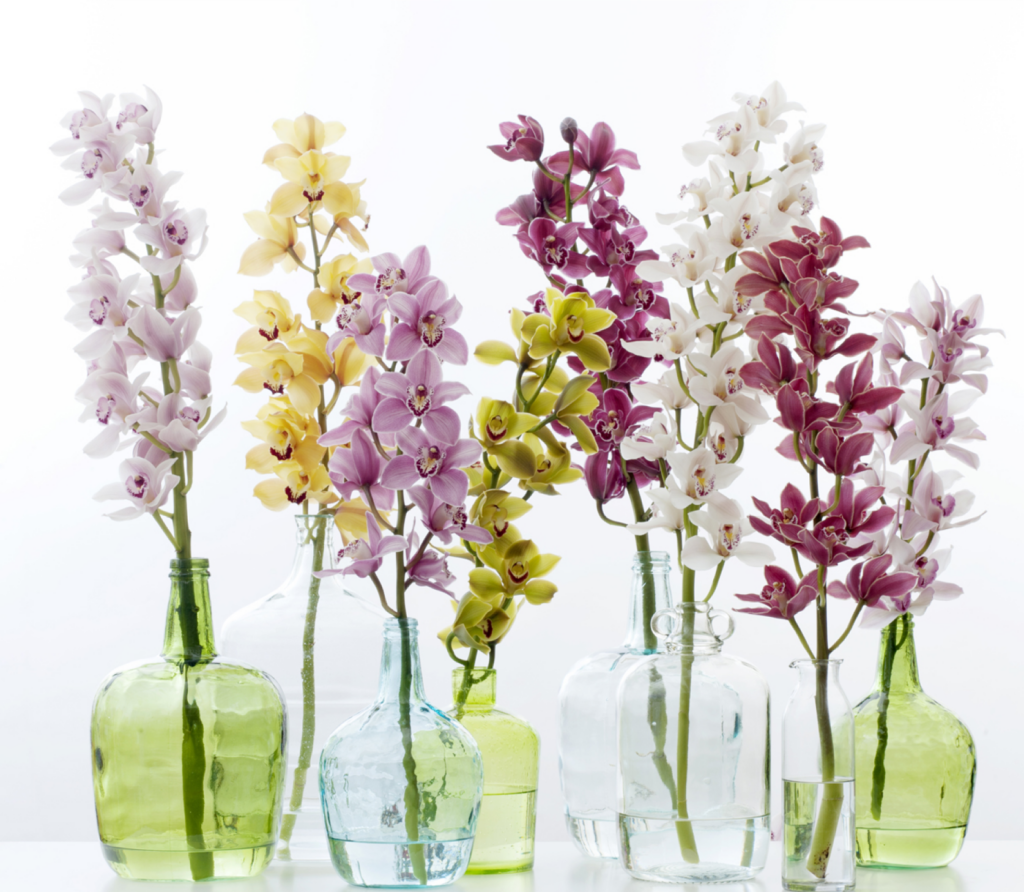
Cymbidiums are available in red, orange, yellow, green, blue, indigo and violet. They are also available in natural colours such as brown and white. And if you still haven’t found something you like, there are also two-tone varieties.
Download the latest varieties PDF to explore the available Cymbidium varieties and get inspired for floral design, events and seasonal creations.
Symbolism
Cymbidium symbolises pure, valued and respected friendship. The act of giving the flower is seen as an honour as well as receiving it. It is not surprising that the flower is a popular gift for good friends in China. The flower also stands for morality and virtue.
The Cymbidium gets some extra symbolism from the orchid family tree. In ancient Greece, orchids stood for masculinity and fertility. Later, the flower were praised more highly in Europe for their beauty, strength and opulence.
Origin
The history of cut Cymbidium goes back to 1900. During this period, the English brought over the first Cymbidium plants from the Himalayas in Asia. They started to cross them and gradually more varieties and colours were produced. Nowadays there are more than 1,000 varieties of Cymbidium available all year round, with a supply peak in autumn and winter.
The Himalayan landscape consists mainly of rocks and it can cool down considerably at night. Despite its tropical appearance, the Cymbidium is not a sun worshiper. Luckily, the flowers are robust and even in such harsh conditions it can show off its beautifully coloured flowers! Cymbidium can still be found in the wild in Australia and Asia; in countries such as Nepal, Vietnam and Taiwan.